
Rights management features that reduce your risk
Experience the peace of mind that comes from knowing you have a robust rights management system in place
Know your rights
When your DAM pairs key rights details and licenses with your assets from the start, you can breathe a little easier. To make sure you know where everything is being used, when, and by whom, our system also offers easy-to-configure request forms that can do anything from simply collecting usage information, to requiring the approval of a manager before an asset can be used.
And, like all your content on Tenovos, your licensed assets can be distributed right from the DAM, so it’s easy to ‘recall’ them when they expire.
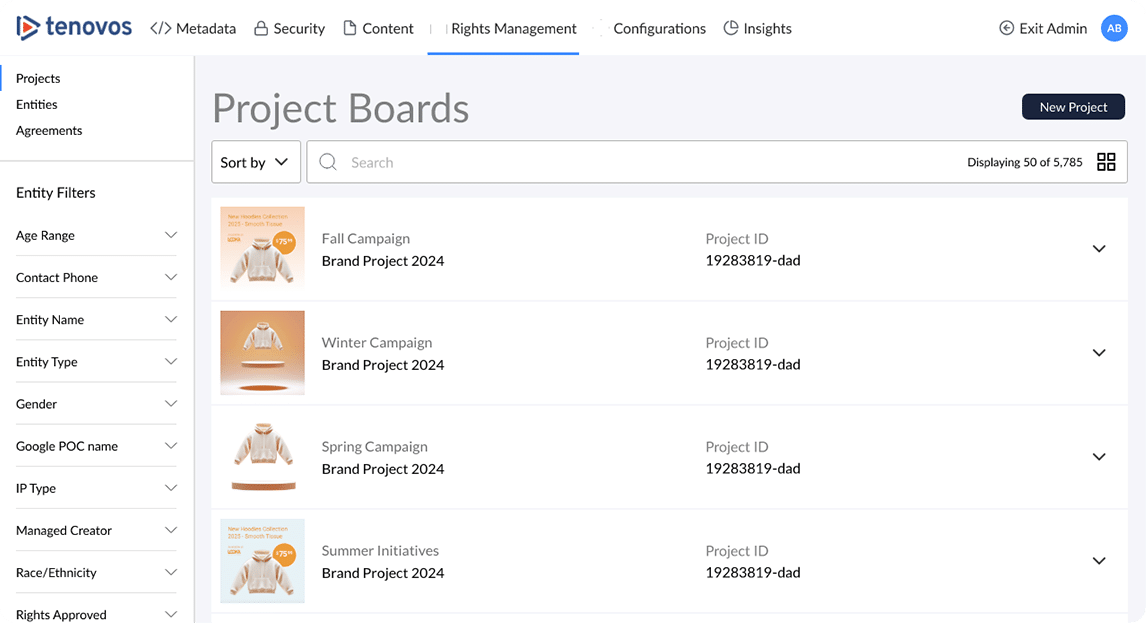
In compliance – automatically
How confident do you feel that every piece of rights-managed content featured in your global campaigns today is being used according to its license?
Our rights management tool pairs licenses with assets from the start and uses them to keep everyone in compliance.
Searches can be limited to only show users results they have the right to use in their geography, content portals can be set to control which assets partners can use, and you can get alerts when assets are nearing expiration – and take them down quickly when they are!

Always a good investment
Having a DAM that gives clear visibility around licensed content can save your organization money in several ways.
First, a direct integration with popular stock sites means you’ll never waste money on multiple licenses for the same artwork. Second, a modern DAM with performance tracking can provide valuable insights into how assets perform compared to the cost of their creation and use – and help you discover which photographers and talent resonate best.
Finally, bulletproof rights management tools can eliminate costly fines for accidental rights violations based on embargoes, geography, and more.
Related Capabilities
Frequently Asked Questions
What is digital rights management (DRM)?
Digital rights management (DRM) is the processes, systems and technologies through which brands control access to their digital assets, and it’s one of the more important factors creatives need to consider when they’re building new content.
Are license agreements a form of DRM?
License agreements are a form of DRM as well, as they, through legal means, protect the use of digital assets. It’s important to note that even if you’ve purchased rights to an asset – and therefore have access through the licensor’s proactive DRM system – you still must adhere to the terms of the license agreement.
What rights management features should a DAM include?
Digital rights management features in DAM should include: The ability to ingest content in bulk and automate the application of rights restrictions, based on existing license agreements; Filter and search for content based on licensing permissions (ie. search for available content in a specific region, or for a specific timeframe); List all assets that exist in the DAM under any given license agreement, or entity/licensor; System notifications for any licenses that are about to expire; Restricting access to assets with an expired license; Automate workflows for asset download requests if legal/other reviews are still required.
How does Tenovos keep licensed content in compliance?
When your DAM pairs key rights details and licenses with your assets from the start, you can breathe a little easier. Searches can be limited to only show users results they have the right to use in their geography, content portals can be set to control which assets partners can use, and you can get alerts when assets are nearing expiration – and take them down quickly when they are!
What happens when a license expires?
And, like all your content on Tenovos, your licensed assets can be distributed right from the DAM, so it’s easy to ‘recall’ them when they expire.
Can I control who uses an asset and why?
To make sure you know where everything is being used, when, and by whom, our system also offers easy-to-configure request forms that can do anything from simply collecting usage information, to requiring the approval of a manager before an asset can be used.
Can I connect our licensing system to the DAM?
If you do a lot of licensing you may manage those agreements within a digital rights management, or a licensing, system. Integrating that system with your DAM lets you automatically leverage those agreements to control access to content within your digital asset management platform. Based on your license agreements, you can automate access of licensees (external parties) to the content they’ve purchased rights to, and pull that access when the agreement expires.
How do I measure the ROI of licensed content?
With built-in digital rights management, your DAM will tell you all the assets you own under a given license agreement. You can then easily see how many of those you used, how they were used, and how that content performed for your business. When it comes time to renew licenses for those assets, you’ll have a much better idea of how to spend your money if you know what worked for you, and what wasn’t worth the investment.
How should AI-generated assets be managed?
To ensure brand compliance internally, teams should ensure that any AI-generated assets are treated no differently than traditional content. This means they should go through the same review and compliance workflows as any other content your business creates.
Why is AI-generated content a rights risk?
When AI generates content, it may produce work that closely resembles someone else’s. Without a clear understanding of where this inspiration was sourced from, it’s challenging to establish how to handle proper attribution and ownership credits. This could make it difficult for the content to meet an organization’s legal and compliance requirements, or pass through the review and approval process.
Let’s Talk About Your Content.
See how Tenovos can help you improve productivity, visibility, and velocity related to content creation and optimization at scale.